





Great Creatures Orangutans and Dragons
13 Days 5200 ex Denpasar (Bali)
Accommodation
6 Nights Hotel
2 Nights Camping
2 Night aboard a Klotok
2 Night Boat Cabin
Transportation
Mostly by boat.
Some walking & vehicle transfers
Included Meals
12 Breakfasts
8 Lunches
6 Dinners
As you hold your breath (momentarily, although it often feels like time is standing still), the mother, her young, nestled safely in her arms, looks up, seemingly staring directly into your eyes.
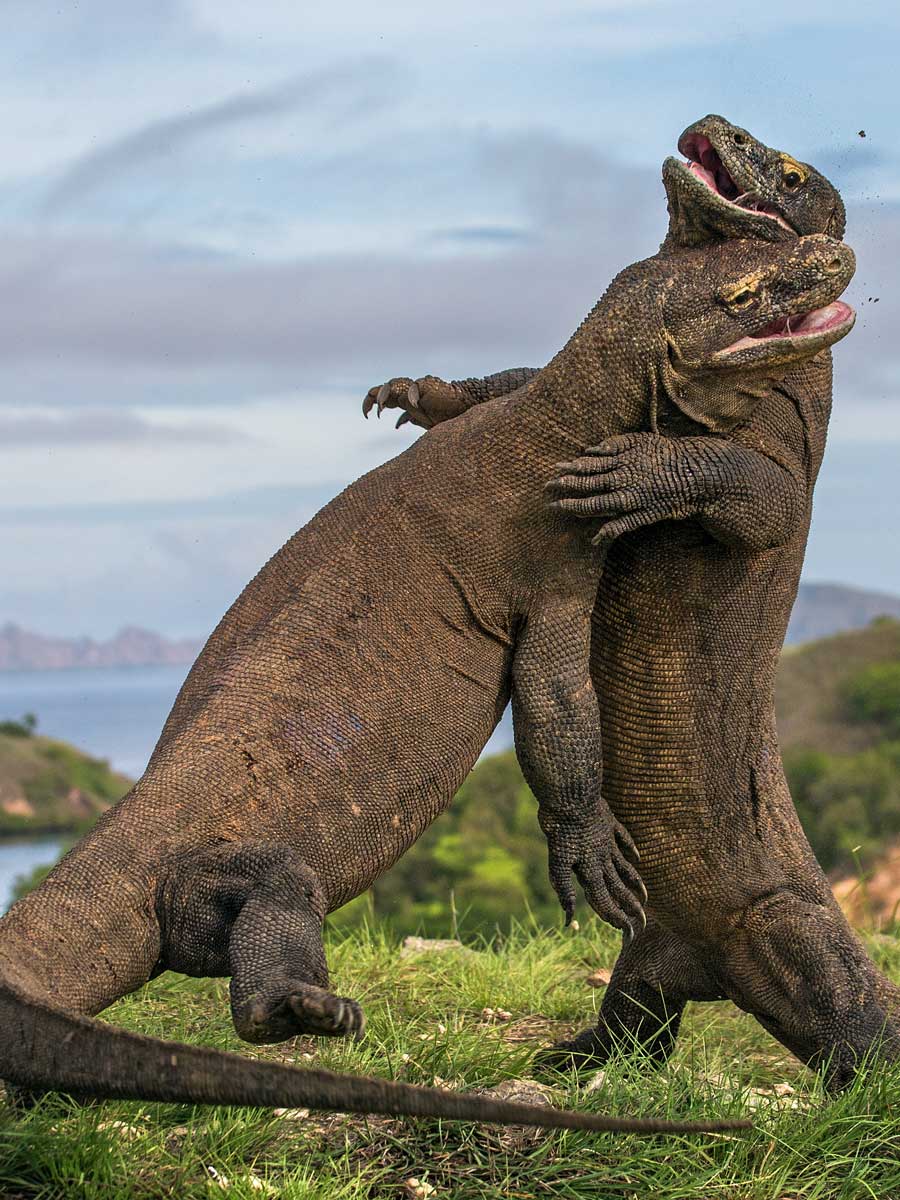
Days earlier, heavy footfalls, a flicking tongue. Flies buzzing around rows of jagged teeth…
This is the trip.
An opportunity to experience such ancient and humbling creatures as the Komodo Dragon and the Orangutan.
With animal welfare and the great outdoors forming its roots, this is one of those trips of a lifetime!
“A primatologist told me you can find love in the eyes of an orangutan.
It’s that old primate gleam that goes back thousands of years and can penetrate the deepest gloom of the jungle.”
Shawn Thompson
Prepare for an adventure, as we’ll be visiting two of Indonesia’s most remote regions in the islands of Nusa Tengarra, and the jungles of Kalimantan.
In doing so, we’ll visit the islands of Komodo and Rinca (on Rinca, there is the highest Komodo population density of anywhere on the planet), and on Borneo (the very name conjures thoughts of exploration and adventure), we’ll venture upriver by Klotok, to Camp Leakey, a scientific Orangutan research station in the jungle, where vital conservation work has been conducted for five decades!
This is a trip that combines the thrill of wildlife spotting, with education, so you have the opportunity to get as much out of the experience as you wish.
Add to the equation the chance to do much of it by the power of your own arms, it’s just that bit more satisfying !
“Then a very large Komodo breaks into view, spooked by our trespass, and scrambles up the vertical face of the bluff, like an alligator scaling a four-story building.”
David Quammen, Science, Nature & Travel Writer
The Journey
Upon arrival in Denpasar, you will be met at the airport by your driver and transferred to your hotel.
Depending on the time of your arrival you will have free time to relax before an evening meeting with a No Roads Representative who will provide you with your domestic etickets and information required for the following day.
Overnight at Hotel.
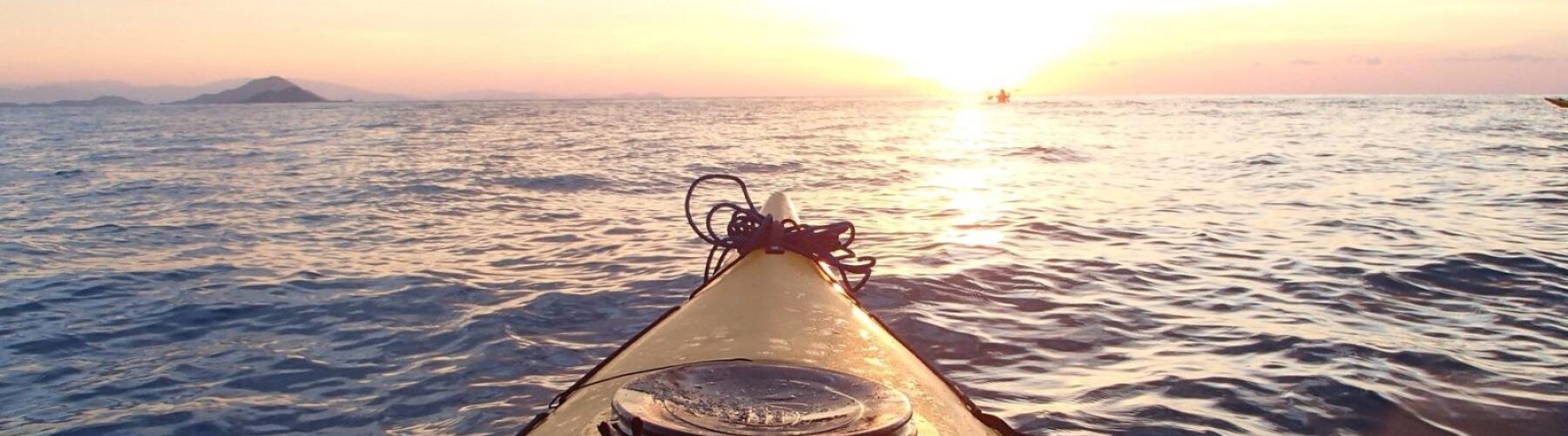
An early morning flight to Labuan Bajo and a quick boat out to our support boat and our awaiting Sea Kayaks. But the true start is the precise moment your blade first breaks the glass of the Flores Sea. This isn’t just a paddle; it’s a deliberate exit from the noise of the world and an entry into a deeper, oceanic tempo.
Our first leg pulls us toward Pungu Island, where the Atlas Pearl Farm sits as a testament to the sea’s cold, distilling patience. From there, we thread the needle into the Bangkau mangroves—a skeletal, salt-crusted architecture of roots and shadows. It is a rhythmic, meditative crawl through a world of “green-light” that opens suddenly into the kinetic, neon riot of the coral gardens.
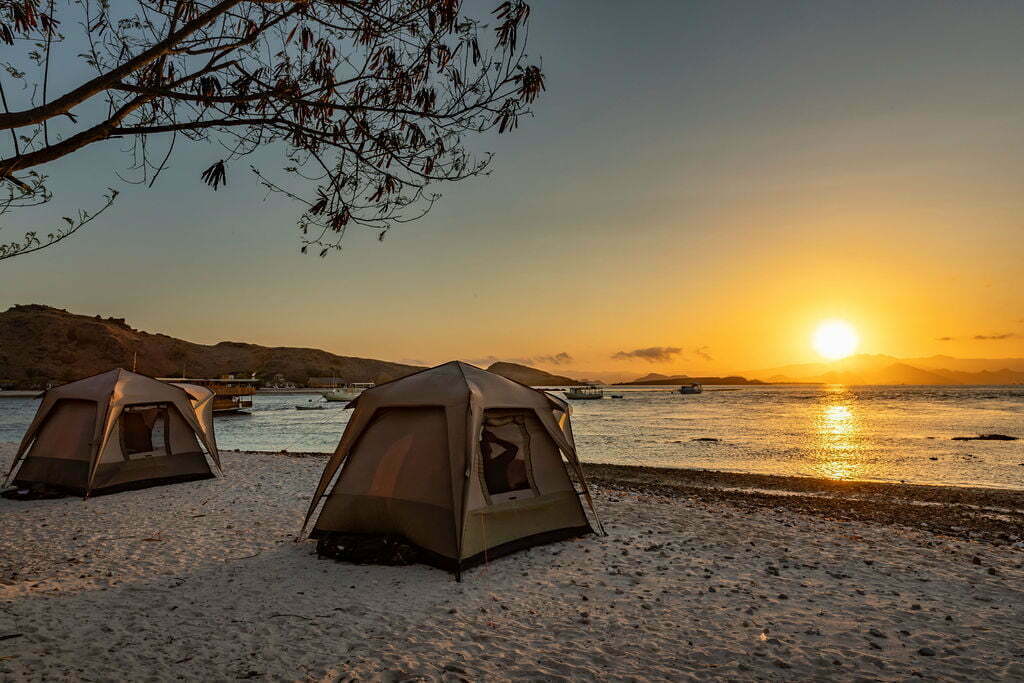
As the light ambers, we retreat to the sands of Pungu. The day’s 10.5km effort settles into your bones just as the sun touches the horizon. This isn’t a sanitized resort; this is the visceral reality of the wild. You’ll sleep in Safari-style tents on the beach, with nothing but a thin layer of canvas between you and a sky crowded with ancient stars. Wash off the salt, grab a cold drink, and listen to the island breathe.
The Details:
The Effort: ~10.5km of introductory paddling; finding your rhythm.
The Sensory Reward: The emerald silence of the mangroves and the first night of beachfront solitude.
Stay: Safari-style tents on Pungu (A room with a view of the infinite).
Provision: B, L, D (Fuel for the soul).
We begin with a pre-breakfast snorkel off Pungu Island, washing away the sleep in a crystalline blue that feels like liquid light. Afterward, we climb aboard the support boat for coffee and a meal that tastes of salt and anticipation—the kind of fuel required for the crossing ahead.
Our first paddle pulls us toward the jagged edge of local life at Kukusan Island or Rinca Village. This is the Indonesia of grit and grace, stripped of the glossy brochure filter. If the local school is in session, we’ll step ashore to meet the next generation of islanders, a grounding reminder that while we are merely drifting through, this rugged, volcanic landscape is a hard-won home.
Back on the water, we navigate toward Gado, a realm of “mangrove cathedrals” and deep-green silences. Beneath the surface, the reward is architectural: giant table corals that suggest a submerged city. Here, sea turtles glide through the pillars with a heavy, prehistoric indifference to the world of air and sun above.
As the light begins to bruise into a deep purple, we reach Kaaba, an island defined by its dense thickets and its winged inhabitants. At the exact moment the sun dips, thousands upon thousands of fruit bats erupt from the trees—a mass exodus that fills the sky with a rhythmic, primitive thrum. Watching this from the top deck is a singular moment of awe; a reminder that we are small, the world is very old, and we are lucky to be witnesses. We’ll spend the night on the boat, rocked to sleep by the slow, dark pulse of the Flores Sea.
The Details:
The Effort: ~7.2km of paddling; 9km of boat transit.
The Sensory Reward: The scent of clove cigarettes and salt in the village; the rush of a thousand wings at dusk.
Stay: Cabin on the support boat (A floating sanctuary).
Provision: B, L, D.
We rise with the sun and move toward Rinca—pronounced Rin-cha—a rugged, sun-bleached stronghold where the Komodo Dragon still reigns supreme. This isn’t a sanitized exhibit; it is a landscape of heat and scales, denser and wilder than its neighbors. We are led by a Park Ranger, a man who understands the subtle, silent language of the island, tracking not just the dragons but the entire supporting cast of the Pleistocene: macaques, water buffalo, and Timor deer. It is a visceral reminder that the world still holds places where humans are not the apex, but merely observers. Afterward, we shake off the dust at the Ranger’s Café, the coldness of a drink a sharp, welcome contrast to the dry breath of the bush.
From the scorched earth of Rinca, we head west toward the surreal, crushed-coral sands of Pink Beach, then onward to Manta Point. If the dragons represent the earth’s heavy, predatory past, the Manta Rays represent its weightless grace. Sliding into the water here is a transformative shift in perspective. These massive, winged shadows glide through the current with a silent, haunting elegance. If the tide is right, they circle back—curious, grand, and entirely indifferent to our presence—while sea turtles navigate the coral gardens below with a slow, deliberate wisdom.
After lunch, we steam toward Sebayur Besar. Find a seat on the deck as the light begins to fail and the sky prepares for its final, dramatic act. Watching the sun drop behind the volcanic silhouette of Sangeang Island is the kind of moment you cannot manufacture; it is a quiet, burning intersection of fire and water. We spend another night anchored in the heart of the park, the boat a steady sanctuary amidst the vast, darkening pulse of the archipelago.
The Details:
The Effort: A 5km paddle to keep the blood moving; 13km of boat transit through the islands.
The Sensory Reward: The dry, earthy scent of the Rinca scrub; the electric thrill of a Manta’s shadow passing beneath you.
Stay: Cabin on the support boat (The ultimate room with a shifting view).
Provision: B, L, D.
We begin with the ritual: a morning snorkel and breakfast on the water, washing away the residue of sleep before the first strike of the blade. Today, we navigate the floating forests of Sebayur, where the mangroves muffle the sound of the world and the water takes on a deep, jade stillness. It is a quiet, rhythmic start—a slow-burn paddle through the park’s most serene corridors toward the pale sands of Kanawa Island.
From Kanawa, we push further north, aiming for Sabolon Kecil. It is, quite literally, a “speck” of an island—a tiny, defiant shard of sand and scrub dropped into an ocean of impossible blue. There is a specific, primal satisfaction in finding a spot on the map that feels as though it belongs to no one else. We drop anchor for a snorkel and lunch, letting the midday sun bake the salt onto our skin in a place that feels outside of time.
The afternoon leg traces the rugged topography of Sabolon’s larger sibling, a stretch of coastline that remains raw and untouched. We aren’t just passing through; we are tracing the very edges of the earth’s crust. Our day’s 10km journey concludes at Seraya Island, where the sand is bone-white, the water is a clear lens, and the silence is absolute.
Tonight, we return to the earth. We’ll overnight in Safari-style tents pitched directly upon the beach. There is no luxury quite like the sound of the tide rhythmic against the shore just feet from your pillow, or the scent of woodsmoke mingling with the cooling sea air. It is the perfect vantage point to reflect on the miles behind you and the final horizon ahead.
The Details:
The Effort: ~10km of coastal and mangrove paddling; a test of endurance and grace.
The Sensory Reward: The profound isolation of a “speck” island; the tactile grit of the safari camp.
Stay: Safari-style tents on Seraya Island (The salt-stained sanctuary).
Provision: B, L, D.
The last morning in Komodo National Park arrives with a particular kind of stillness—the quiet gravity of a closing circle. After a final breakfast on the edge of the world, we take one last plunge into the blue before gripping the paddles. We navigate the mangroves, a sun-dappled “under-land” where the forest meets the tide in a tangle of ancient, salt-hardened roots. Whether you are a seasoned voyager or newly acquainted with the sea’s rhythm, the language of the water through the trees is universal. We make for Kanawa, a final outpost of vibrant reef, for a snorkel that serves as a parting gift from the depths.
From the brilliance of the reef, we transition into the shadows. A short boat ride brings us to Goa Rangko, a hidden limestone gallery where a pool of electric-blue water sits encased in stone. This is a subterranean sanctuary, a cool, mineral-rich heart beating inside the island’s tectonic silence. We swim in the cathedral dark before emerging for a final beachside lunch on Seture Island.
The final 19km stretch is a victory lap through a landscape that has, by now, become a part of you. As we pull back onto the beach where this journey began, the ache in your shoulders is a badge of honor; the salt in your hair, a permanent souvenir of the wild.
To conclude, we leave the “traveler” persona at the door. You are invited into the home of Ibu Fitri, our manager in Labuan Bajo, for a meal that defines the soul of Indonesian hospitality. This isn’t a curated performance for the cameras; it is a seat at a real table. You will taste specialty dishes born of local markets and family secrets—flavors that are bold, unapologetic, and deeply rooted in the volcanic soil of the islands. It is an evening of storytelling and genuine connection, a chance to see the real Indonesia through the eyes and the kitchen of a friend. Fitri will look after the rest; you just need to bring an appetite and an open mind.
The Details:
The Effort: ~19km of rhythmic paddling; the final conversation with the sea.
The Reward: Subterranean cave swims and the heat of authentic home-cooked spice.
Stay: Labuan Bajo Hotel (A soft landing).
Provision: B, L, D (The authentic stuff).
In the morning we’ll be transferred to the Komodo Airport for a domestic flight to Bali.
Upon arrival in Bali, a driver shall meet us at the airport, and transfer us to our hotel where we shall overnight, before flying to Borneo the following day. (B)
Today you fly from Bali to Pangkalan Bun in Central Borneo via Surabaya. Arrival will be mid-afternoon (subject to flight schedule times). You will be met at the airport by your local OO guide and be taken to the hotel for check-in. Overnight at the Grand Kecubung Hotel. (B)
The transition from the world of roads to the world of water begins at the riverside town of Kumai. Here, we board our klotok—a traditional wooden riverboat that serves as our floating study, our kitchen, and our home for the next three days. As the engine settles into its steady, rhythmic pulse, we cross the threshold into the Tanjung Puting National Park.
To travel by klotok is to embrace a different kind of speed—one dictated by the slow, amber flow of the river rather than the frantic ticking of a clock. We cruise deeply into the interior, our eyes scanning the high, emerald galleries for the sudden rustle of a branch or the flash of orange fur against the deep-green silence.
In the afternoon, we make our first pilgrimage to Tanjung Harapan. At this feeding station, the forest seems to exhale, and the “People of the Forest” emerge from the canopy with a slow, deliberate grace. There is a weight to these encounters, a sense of witnessing an ancient, quiet wisdom that predates our own.
As the light begins to fail and the shadows lengthen across the tea-colored water, we search for the Proboscis Monkeys, watching them leap through the riverside trees in the cooling air. Night falls quickly in the jungle, bringing with it a symphony of hooting gibbons and rhythmic insects. We spend the evening on deck, anchored in the heart of the wild, sleeping under a canopy of stars and a thin layer of canvas as the river breathes beneath us.
The Details:
The Journey: Boarding the klotok for a 3-day immersion into the deep-green wild.
The Sensory Reward: The tea-colored wake of the boat; the amber eyes of the forest’s elders.
Stay: Overnight on board the klotok (A floating sanctuary).
Provision: B, L, D.
We rise with the first light, the mist still clinging to the surface of the Sekonyer River like a shroud. This morning, the klotok pushes deeper into the interior, tracing the water toward Camp Leakey—the ancestral heart of orangutan conservation and a place of profound, living history.
The journey upriver is a slow-motion hunt for the eyes. We move at a pace that allows the forest to reveal itself: the sudden, electric blue of a kingfisher, the distant hoot of a gibbon, or the rustle of a wild orangutan moving through the high dipterocarps. At Camp Leakey, the line between the observer and the observed begins to blur. You are as likely to be watched by an orangutan from the riverbank as you are to spot one from the deck.
After lunch aboard our floating sanctuary, we step onto the damp, aromatic earth for a trek to the information center. This is the oldest ground in the park, a place where the deep-time research of the forest began. We witness the afternoon feeding—a communal, vocal event that brings the “People of the Forest” down from their hidden cathedrals.
As the sun begins its descent, we cruise down the Camp Leakey River toward the still, dark waters of Crocodile Lake. This is the visceral heart of Borneo; a place where the proboscis monkeys crash through the canopy in their evening rush and the shadows of the prehistoric world feel very close. We spend the night on the klotok, anchored in the silence of the lake, listening to the jungle’s nocturnal heart beat against the hull.
The Details:
The Journey: A deep-water pilgrimage to the historic Camp Leakey.
The Sensory Reward: The smell of damp earth and woodsmoke; the unsettling, intelligent gaze of a great ape.
Stay: Overnight on board the klotok at Crocodile Lake.
Provision: B, L, D.
Our journey continues with a final morning pilgrimage to Pondok Tanggui, the park’s second sanctuary of the “People of the Forest.” Here, the morning light filters through the canopy in long, dusty shafts, illuminating the slow, deliberate movements of the orangutans as they emerge for their morning ritual. It is a quiet, reverent space—a reminder of the delicate thread that connects us to these ancient, ginger-haired kin.
After a lunch shared on the river, we step away from the wild to witness the human geography of the forest. A visit to the local village offers a glimpse into a way of life defined by the river’s ebb and flow—a grounded, unhurried existence far removed from the frantic noise of the modern world.
As the afternoon matures, the klotok begins its long, slow drift downriver toward Kumai. We hug the banks, watching the proboscis monkeys—those idiosyncratic, long-nosed acrobats of the canopy—gathering in the riverside trees for their evening assembly. It is a visceral, sensory parade of life, viewed from the steady comfort of our wooden vessel.
As the sun dips below the horizon and the sky turns to bruised velvet, we make our way back to the harbor. If the night is still, the darkness along the riverbanks begins to pulse with the rhythmic, electric light of thousands of fireflies, turning the jungle into a glittering reflection of the star-crowded sky above. We share a final dinner on the water, a meal flavored by the salt and spice of the islands, before we transition back to the solid earth for the night in Pangkalan Bun.
The Details:
The Journey: A final immersion at Pondok Tanggui and a slow, luminous descent to the coast.
The Sensory Reward: The rhythmic heartbeat of fireflies in the dark; the bold flavors of a final riverside meal.
Stay: Grand Kecubung Hotel, Pangkalan Bun (A soft return to the world of concrete).
Provision: B, L.
Today after a relaxing morning you will be taken for lunch before heading to the airport to catch your plane back to Bali. On arrival in Bali, you will be transferred to our hotel.
Overnight at Hotel. (B)
Our amazing adventure is at an end, and you are free to continue your travel plans or return home.
Note: This itinerary is indicative and may change due to local conditions and the strength of kayaking team.
Journey Extensions
Check out our Journey Extensions for those that want to stay a little longer or try something different along the way.

Duration: 3 hours (9am-12.00pm)
Price: AUD $75 per person (minimum of 2 guests)
Tour Includes
Collection and return to Hotel by air conditioned car
Guided Tour of coffee plantation & surrounding area
A free packet of ground coffee (packaged)
Coffee and morning tea at Cafe Inn Hit
*Please ensure that runners or light hiking boots are worn on this extension.

Cook and eat three delicious traditional Indonesian meals, and take the recipes home.
Duration: 3.5-4 hours (9am-12.30pm)
Price: AUD $75 per person (minimum of 2 guests)
Tour Includes
Collection and return to Hotel in a air conditioned car.
Visit to local market with Chef to purchase food for the cooking class
Water/mineral water
Cooking instructions & participation in cooking of 3 main meals
Copies of recipes
Duration: 5 Days / 4 Nights
Price: AUD $850 per person (twin share). Single Traveler $1250 ex Labuan Bajo
For those that have just completed the Komodo Dragon trip, our 5 day 4 night Flores Road Trip is a perfect trip extension. Please note that this itinerary can also be done in reverse to work in with your kayaking itinerary.
Flores is one of the most diverse landscapes on earth with an amazing array of cultures mixed in. Dramatic mountain landscapes, lush fertile valleys, rivers, lakes, waterfalls and more await those that wish to explore the island. To top the trip off we will take you to a volcano (Kelimutu) that has three different colored lakes.
Please note that Flores is a rugged and mountainous island and as such the road trip can be long. Hotels used are the best available. They are usually very basic with hot water. The Eco Lodge in Moni has excellent facilities throughout.
Day 1 Labuan Bajo to Ruteng
After breakfast we will start our road trip to Ruteng. The road will wind its way eastward for a couple of hours before we reach Cancar (pronounced Chanchar). There we will head out to Cara village and climb a small hill that looks over a wide valley. Cara is famous for its spider web rice fields. More technically the agriculture they persist with is known as Lingko in which a field is divided up among the various families of a village from one central location. A wooden pole known as the lodok is placed in the centre of the land. A string is run out to the fields extremities and then divided into moso (meaning hand) forming the wedge like fields. As the lands contours are taking into account across these moso, the field starts to resemble a spiderweb. There are great views of these fields from this hill.
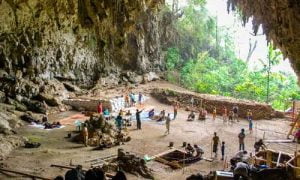
We continue on after lunch to Liang Bua about 1 hour from Ruteng. Liang Bua is the resting place of the Homo Floresiensis, a 106 cm high humanoid that lived in these parts. Discovered in 2003, scientists now speculate why the Hobbit as they are being dubbed, died out. Was it because of Homo Erectus or was it something else. This large grotto cum cave is just off a side road that winds its way through beautiful rice fields and mountain terrain. A local guide will come and show you through the place including a small side cave and the opening to a deep 27 meter hole that leads to another cavern (this is not accessible by non scientists).
From Liang Bua we will head back to Ruteng and the Susteran Maria Berduka Cita convent run by some very nice Sisters. The rooms are very clean and there is even BBC available on the TV.
Day 2 Ruteng to Bajawa
We continue eastwards into more rugged mountain roads. Along the way we will stop at a small lake called Ranamese with sweeping views of the coastline. From there we continue to the seaside village of Lega Lapu where we will sample some Arak or Palm spirits. While you may have tasted Arak before, this brew is quite good and actually drinkable.
From Lega Lapu we continue back into the mountains for Bajawa. This is a great yet strange town with bare back cowboys and beautiful landscape to boot. In the afternoon we will head to Soa which is a natural hot spring just out of town. This is a great place to relax and sooth aching muscles. Tonight we will dine in a timber restaurant (Lucas) that makes great fried potatoes.
Overnight Bajawa Roo Hotel. (B)
Day 3 Bajawa to Moni via Ende.
This is our last day of driving and possibly the most spectacular of them all. After an early breakfast we will head by car towards an amazingly beautiful valley near the Ngada village of Bena. However Bena is where we will end our 1.5 hour trek from Gurusina down in the valley. Our trek will take us along small paths back up the mountain, through several Ngada villages.
Ngada culture is based around the balance of the male and female. Houses and smaller structures are either characterized by a male or female spirit. Ngada culture is matrilineal, meaning that property ownership and clan names are passed down through the woman’s side. The men however have great influence in day to day functions of the village. Ngada villages are welcoming and are a fascinating and beautiful place to trek through.
We finish our hike in Bena, a large Ngada village overlooking the valley. Keep an eye out for small wooden houses and people sitting atop the homes in these villages.
From Bena, we continue on to Ende and then onto Moni. The road from Ende to Moni would have to be some of the most beautiful on the planet, with sweeping valley views and dozens of waterfalls cascading in the distance. We will arrive in Moni quite late so dinner at the Eco Lodge is suggested.
Overnight Kelimutu Eco Lodge (B)
Day 4 Moni to Kelimutu
We will rise early, around 430am, to walk to the summit of Kelimutu. We can get a small breakfast hamper put together of banana pancakes, water and a boiled egg to have on Kelimutu. The park’s car park is a 30 minute drive from Moni and then from there a fairly easy 30 minute walk to the top. If we are lucky, the cloud will part at sunrise and the beautiful turquoise lakes of Kelimutu will reveal themselves.
Kelimutu are 3 dormant volcanoes that have been filled with water. Due to minerals being dispersed into the water, the lakes exhibit varying colours. The strange thing is that the lakes are so close to each other but the lakes can have different colours such as red, blue and black.
If the summit is shrouded in cloud (which is common) and you don’t see the lakes, don’t worry. We will head back down to Moni with a possibility of a 2 hour walk through the fields to the Eco Lodge. We can shower and get another bite to eat there watching the Kelimutu summit from your room waiting for the the cloud to clear. We can return to the summit in the afternoon or if all else fails, we can go up again the next day.
We suggest dinner at the Eco Lodge and our personal favorite, Mori’s Moni chicken. (B)
Day 5: Moni to Ende to Bali
This morning, assuming you have already seen Kelimutu, we will go for another walk through the valley. We can even arrange for a horse ride through the villages at your own expense. We will also visit the 10000 Rp market where every bunch of vegetables is 10000 Rp. The stall next door will sell for the same price so price is not negotiable. The fruit and vegetables are displayed beautifully and it is a nice place to wonder.
From there, we will head down to Ende for your flight back to Bali. (B)
Included:
– Accommodation between Labuan Bajo and Moni
– Expert No Roads Guide throughout
– Vehicle use throughout trip
– All meals as outlined in Itinerary
Note: If you are adding this extension to a Komodo kayaking trip then your flight to or from Ende before or after your road trip is included in the Komodo Kayaking trip. Please contact us directly to confirm dates if you wish to add this extension on to a Great Creatures Expedition.
Not included:
– Accommodation in Labuan Bajo
– Flight to and from Flores
– All other incidentals including lunches and dinners
Duration: 4-6 hours (May-Oct)
Price: AUD $85 per person (2 guests or more)
Price: AUD $115 single guest
Tour Includes
Collection a Hotel by airconditioned car
Transfer on the back of motorbike from main road along dirt road into village
Guided tour of vegetable crops and banana plantations
Guided tour of village
Lunch in the village
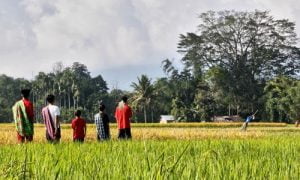
5-20 minute trek through the rice fields to the “pregnant lady rock” and will be told the local story of how the rock formed. Guests will then head back into the village, where once again they will get on the back of a motor bike for a trip to see the fossilised trees and local hot springs.
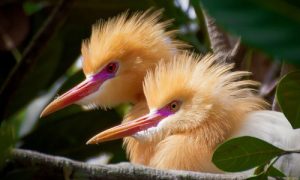
Mbeiling Eco Lodge is a haven for wildlife and the lodge contributes significantly to the conservation and sustainability of the local communities and species of the area.
Stay overnight at this stunning Eco Lodge, which is 45 minutes from the centre of Labuan Bajo.
We can arrange activities such as the Mbeliling Trek, Bird Watching, Flores Coffee & Nature Appreciation Tour, Cunca Wulang Waterfalls or Cecer Village Visit all from Mbeliling Eco Lodge.
Price: AUD $130 per room per night twin share
Check in – 2.00pm – check out 12.00pm
Inclusions:
Return transfer to and from Labuan Bajo by air-conditioned car.
Standard Double/Twin Room accommodation
Breakfast
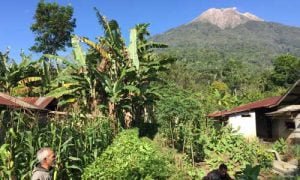
The highlight of this three day tour is the fully guided climb up Mt Inerie to see the sunrise. Mt Inerie is 2,245 meters above sea level and is also one of the highest volcanoes in Flores, the trek takes six hours and starts at the very early time of 2:30 am. Tour also includes a visit to the local hot springs and a visit to the traditional village of Bena. This trip is a wonderful example of the incredible sights that you can discover when you go off the beaten track and take the road less traveled.
Duration: 3 days
Price: AUD $490 per person (minimum of 2 guests)
Price: AUD $750 – single guest
Tour Includes
All transfers to and from airport.
Return domestic flights – Labuan Bajo to Bajawa
2 Nights accommodation at Bajawa Roo Hotel including breakfast
Town tour of Bajawa
Visit local hot springs
Sunrise volcano trek up Mt Inerie (start time is 2.30am)
Local Guide for Mt Inerie trek
Driver in Bajawa
Meals – 2 x breakfasts (lunches and dinners at guests own expense)
* Guests must have a good level of fitness to complete the Mt Inerie Volcano Trek. Hiking boots are essential.
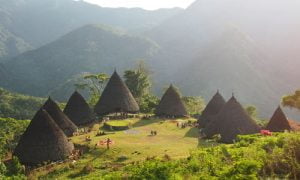
Flores is a relatively unexplored part of Indonesia. This mountainous island hides beautiful villages from the normal tourist, but with this 2 day trek, you will venture into this wonderland and experience the great hospitality of its’ people.
Itinerary
Day 1: We will leave Labuan Bajo at around 8am and head up into the mountains to Dintor Village (approx 4 hours drive). Along the way we will have lunch and witness the ruggedness of the Flores landscape. Once we have arrived at Dintor Village we will start our trek for Wae Rebo village, which will take us through the amazing open mountain terrain where we will see the fantastic cone shaped houses (approximately 2 hours). In Wae Rebo we will stay in a traditional home and be the guest of the village. They will show us their way of life high in the mountains. This is a great experience for those who want to witness traditional lives in Flores. Dinner and Breakfast will be provided in the village. (L,D)
Day 2: After breakfast you will have some time to immerse yourself in the local village before we start our trek down to Denge Village and then drive to Dintor Village where we will have lunch. From there we will return back to Labuan Bajo in the early evening for you to continue your travels. (B,L)
Included
Car and driver
Local Guide
Overnight accommodation in Wae Rebo Village
Breakfast, Lunch and Dinner (as per itinerary)
Exclusion
Accommodation on the night of Day 2 (your return to Labuan Bajo). We can offer accommodation in Labuan Bajo for AUD$95 Twin Share subject to change and availability.
Price
We can run this trip for 1 – 5 Pax
1 Person $650
2 Person $375 per person
3 Person $345 per person
4 Person $315 per person
5 Person $300 per person
Season
March to November
Includes
- 6 nights of hotel accommodation across Bali, Labuan Bajo and Tanjung Puting
- Domestic flights as noted in the itinerary
- 2 nights aboard a Klotok (boat)
- 1 night on our boat in the Komodo islands and 3 nights in Safari tents on deserted islands
- Kayak use with all safety gear including vest, paddle
- All Ranger, local guide & boat mooring fees
- National Park Fees
- All meals as indicated in itinerary (Breakfast – B, Lunch – L and Dinner – D)
Excludes
- International Flights
- Airport taxes
- Travel Insurance
- Photography and Video fees within the Komodo National Park
- Tips
- Alcoholic beverages
- Any meals not listed as included
A single supplement is available for this trip. However it only applies to the hotels used in Bali, Pangkalanbun and Labuan Bajo not on the boats. We may be able to provide single tents on the beach stays. The price is $700.
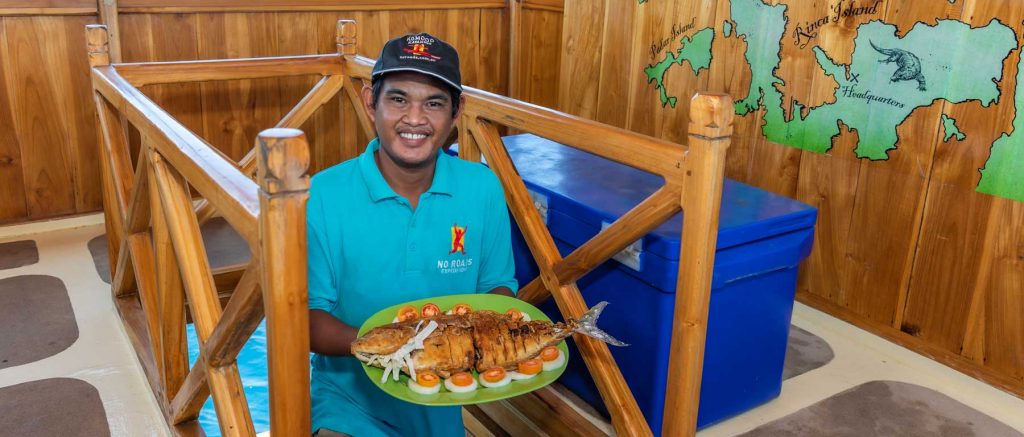
Food in Indonesia
It may not be the same as home, but Indonesian cuisine is a fabulous melting pot of indigenous and foreign influence.
Think fresh seafood, mild and spicy curries, fiery Sambal and delicious rice and noodle-based dishes.
If you’re familiar with Malaysian fare, it will all feel very familiar, whilst the influence of Chinese and migrants from the sub-continent are all very apparent.
In a nutshell, it’s quite delicious, and most dietary needs can be accommodated.
“No Roads Expeditions again impressed us with our Komodo Island and Borneo adventure.
Every detail was taken care of, the boats are fantastic and well setup, the crews friendly and knowledgeable and the food was amazing.
We will be booking our third trip with them as soon as we can choose one of the many destinations and adventures on offer. Couldn’t recommend them enough.”
Jason, No Roads Guest
Getting Around
Your adventure takes you to two quite distinct eco-systems. As such our mode of getting around is different for each destination. In Kalimantan to see the Orangutan, we use a river klotok (boat). These slender vessels are perfect for the narrow waters of the Sekonyer river. Days are spent wildlife watching from the upper deck. We then reach feeding areas by foot.
In the Komodo islands we combine the use of our beautiful boat, Air Dua, with sea kayaks. We will do short paddles from one island to the next. Distances are not huge however paddling can become demanding at times. Remember this is your journey so if this style of travel doesn’t suit you, you simply hop aboard the Air Dua and watch the prehistoric landscape of the Komodo islands pass you by.
Your Guides and Safety
An excellent guide can make the difference between a trip of a lifetime and just an ordinary trip. Our handpicked professionals come from a range of backgrounds. Each has extensive outdoor and paddling experience and a passion for the beautiful flora and fauna of Indonesia.
The guide will ensure that your trip is truly inspiring, a huge amount of fun, and safe. All guides are trained in Safety First Aid and are connected to our in country team and Melbourne offices by satellite phone.