



5 Day Komodo Kayaking
5 Days 2295 ex Labuan Bajo
Accommodation
2 Nights Tent
2 Night on Boat
Transportation
Mostly Sea Kayak
Included Meals
4 Breakfasts
5 Lunches
5 Dinners
Pod Size
2 – 8 Maximum
The water was perfectly flat. Not a breath of wind. Cumulus clouds reflected off the mirror-like sea. The morning air was still crisp. Schools of garfish flew out of the water. A turtle poked its’ head above the surface, watching us paddle by. A pod of dolphins popped up for air just in front of us.
It was the second day of our 5 day Komodo kayaking journey and I could already feel the world I had left behind, the one of emails and work, was now a distant memory and my body and mind were completely refreshed and relaxed.
Seated in my kayak, I placed the right blade of my paddle inline with my right foot and dragged it through the water, pulling it out in line with my right hip. As this happened, I placed the left blade of my paddle in line with my left foot and dragged it through the water, pulling it out in line with my left hip. And so it went. This rhythm placed me in the moment, in a state where my body and mind were at one with the kayak and the water. This all sounds very Yogic and in a way it was, but there are moments (and not too many of them) when you feel this pure “oneness” when paddling.
The following days were a total immersion into the environment in which we were exploring.
I can’t begin to describe how amazing our trip was. It far exceeded all expectations – and every bit of it! I think we were so lucky with the weather, spoilt by all the manta rays we saw but really what made it so amazing was the whole No Roads crew. All of the wonderful prompt support from Head Office in the lead up to our trip along with local Manager, Fitri being so helpful and reliable and responsive during our stay and the Guides (Flori & Matias) and the rest of the crew – just all helped make our trip really brilliant. The whole crew were so friendly and polite, and just great fun! It really was quite amazing.
Jackie – Australia
Days were spent paddling among the Komodo Islands, snorkeling pristine reefs meters from the shore of some isolated and deserted beach. Manta rays, dugongs, turtles, clown fish, angel fish, star fish and a thousand other aquatic marvels inhabited the waters under us, only to be truly discovered once you placed a snorkel and mask on and went beneath the surface.
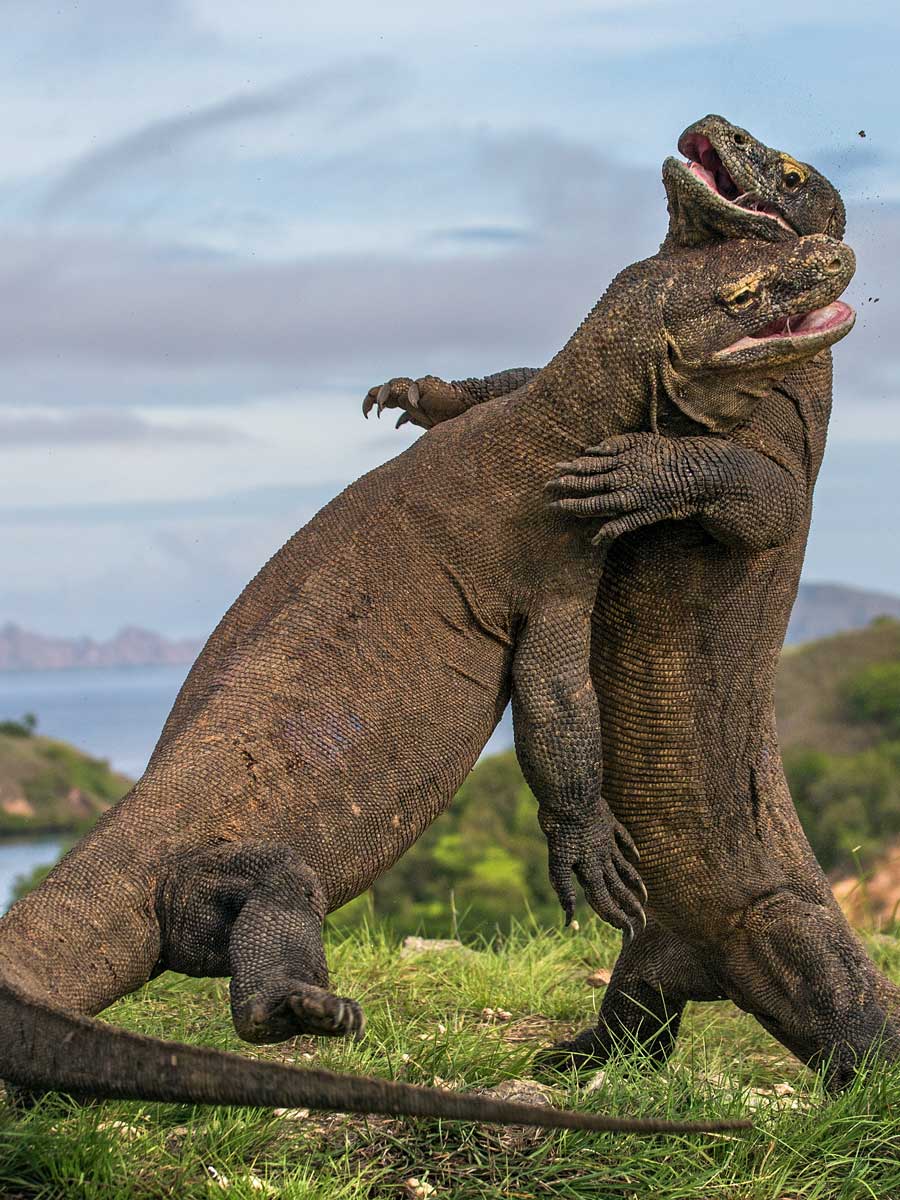
And the creature we all came to see, the Komodo Dragon, hunted its prey in the open savannah of Rinca Island, lumbering its way through the tall grass. It would raise its prehistoric head into the air, flicking its forked tongue in and out, smelling for its next meal in stereo.
But for me, it was the end of each day that was the highlight. We would paddle our kayaks up onto the beach. Our campsite of safari tents was set up by the support boat crew, decorated with shells and rocks. And there on a deserted island, we would watch the sun go down, sipping on a G and T and chatting about the fish we had seen or having a laugh about how badly we were paddling. Dinner was served soon after, sand at our feet and stars exploding above us in the sky.
5 days kayaking the Komodo islands just didn’t seem like enough time, I wanted to stay longer, in the moment. Those times don’t come along very often in life.
The Journey
The journey begins at Puri Sari beach, but the real start is the moment your blade first cuts the glass of the Flores Sea. After a briefing to dial in the gear and the safety specs, we leave the mainland behind. This isn’t just a paddle; it’s an entry into a different tempo of life.
Our first leg pulls us toward Pungu Island. Here, we find the Atlas Pearl Farm, a place where the deep, cold patience of the ocean is distilled into something tactile and shimmering. It’s a glimpse into the quiet, industrial grace of the sea before we move deeper into the wild.
Into the Labyrinth From the pearls, we navigate toward Bangkau Island, threading through the mangrove forests. This is a world of thresholds – where the salt-crusted roots form a skeletal architecture over the water. It’s a rhythmic, meditative stretch of paddling that leads to a reward of pure immersion: a snorkel in the vibrant, kinetic gardens just off Bangkau’s shore.
The First Camp As the light begins to amber, we return to the sands of Pungu Island. The day’s 10.5km effort settles into your bones just as the sun touches the horizon. This isn’t a sanitized resort experience; this is the real thing. You’ll spend the night in Safari-style tents right on the beach, where the only thing between you and the star-crowded sky is a thin layer of canvas.
The sunset here isn’t just a view – it’s an event. Wash off the salt, grab a cold drink, and listen to the island breathe.
The Details:
-
The Effort: ~10.5km of introductory paddling.
-
The Sensory Reward: The cool “green-light” of the mangroves and the first night of beach-front solitude.
-
Stay: Safari-style tents on Pungu Island (The ultimate room with a view).
-
Provision: B, L, D (Fuel for the soul).
Morning in the Komodo archipelago doesn’t ask for your attention; it demands it. Start with a pre-breakfast snorkel off Pungu Island, washing away the sleep in the crystalline blue before climbing aboard the support boat for coffee and a meal. It’s the kind of breakfast that tastes like anticipation.
Human Geography Our first paddle takes us to the edge of local life—either Kukusan Island or Rinca Village. This is the real Indonesia, stripped of the glossy brochure filter. If the local school is in session, we’ll drop in to see the next generation of islanders before wandering the village. It’s a grounding reminder that while we are just passing through, this rugged landscape is a home.
The Coral Gardens Back on the water, we head for Gado. This is a place of deep-green silences and “mangrove cathedrals.” Beneath the surface, the reward is even greater: a world of giant table corals that look like submerged architecture. Keep your eyes peeled for the locals—sea turtles often glide through here with a heavy, prehistoric grace, indifferent to the world above.
The Night Ascent After lunch and a final float above the reefs, we make our way to Kaaba, a small island defined by its dense mangroves and its singular, winged inhabitants. As the sun dips and the sky turns to bruised purple, thousands upon thousands of fruit bats emerge from the trees.
Watching this mass exodus from the top deck of our support boat is a singular, Bourdain-esque moment of awe—a reminder that we are small, and the world is very, very old. We’ll spend the night on the boat, rocked to sleep by the pulse of the park.
The Details:
The Effort: ~7.2km of paddling; 9km of boat transit.
The Sensory Reward: The smell of clove cigarettes and salt in the village; the rush of a thousand wings at dusk.
Stay: Cabin on the support boat (A floating sanctuary).
Provision: B, L, D.
We rise with the sun and move toward Rinca (pronounced Rin-cha). This isn’t a zoo; it’s a rugged, sun-bleached stronghold where the Komodo Dragon still reigns supreme. Rinca is denser, wilder, and offers the best chance to see these apex predators in their natural, prehistoric state.
We’ll be led by a Park Ranger—a man who understands the subtle language of the island—to track not just the dragons, but the entire supporting cast: Macaques, water buffalo, Timor deer, and the occasional tree snake coiled in the canopy. It’s a stark, visceral reminder that the world still has places where humans aren’t at the top of the food chain. After the trek, we’ll grab a cold drink at the Ranger’s Café and shake off the dust.
The Weightless Blue From the heat of Rinca, we head west toward the surreal sands of Pink Beach on Padar Island, then onward to Manta Point.
If the dragons represent the earth’s heavy, ancient past, the Manta Rays represent its grace. Sliding into the water here is a transformative experience. These massive, winged creatures glide through the current like silent shadows. If you’re lucky, they’ll circle back, curious and grand. We’ll also scout the nearby reefs, a favorite haunt for sea turtles who navigate the coral with a slow, deliberate wisdom.
The Fire on the Horizon After lunch, we steam toward Sebayur Besar. Grab a seat on the deck as the light begins to fail. Watching the sun drop behind the volcanic silhouette of Sangeang Island is the kind of “moment” you can’t manufacture. It’s just you, a cold drink, and the vast, burning sky. We’ll spend another night on the boat, anchored in the quiet heart of the park.
The Details:
The Effort: A 5km paddle to keep the blood moving; 13km of boat transit through the islands.
The Sensory Reward: The dry, earthy scent of the Rinca bush; the electric thrill of a Manta’s shadow passing beneath you.
Stay: Cabin on the support boat.
Provision: B, L, D.
We begin with the ritual: a morning snorkel and breakfast on the water. It’s about washing away the residue of sleep before picking up the blade. Today, we navigate the mangroves of Sebayur, a floating forest where the water is muffled by the trees. It’s a quiet, rhythmic start, a slow-burn paddle toward Kanawa Island through some of the most serene corridors in the park.
The Solitude of Sabolon From Kanawa, we push further north, aiming for Sabolon Kecil. It is, quite literally, a “speck” of an island—a tiny shard of sand and scrub dropped into an ocean of impossible blue. This is the Bourdain dream: finding that one spot on the map that feels like it belongs to no one else. We’ll drop anchor for a snorkel and lunch, letting the midday sun bake the salt onto our skin.
The Coastal Drift The afternoon leg takes us along the coast of Sabolon’s larger brother island, a rugged stretch of topography that feels raw and untouched. We aren’t just passing through; we are tracing the very edges of the earth. Our day’s 10km journey concludes at Seraya Island, where the sand is white, the water is clear, and the world is quiet.
The Canvas Ceiling Tonight, we return to the earth. We’ll overnight in Safari-style tents on the beach. There is no luxury quite like the sound of the tide just a few feet from your pillow and the smell of woodsmoke and sea air. It’s the perfect vantage point to reflect on the miles behind you and the final day ahead.
The Details:
The Effort: ~10km of coastal and mangrove paddling.
The Sensory Reward: The isolation of a “speck” island; the tactile grit of the safari camp.
Stay: Safari-style tents on Seraya Island.
Provision: B, L, D.
The last morning in Komodo National Park arrives with a particular kind of stillness. After a final breakfast on the edge of the world, take one last plunge into the blue. Then, we grip the paddles. We navigate the mangroves, a sun-dappled “under-land” where the forest meets the tide in a tangle of ancient roots.
Whether you’re a seasoned paddler or finding your sea legs, the rhythm of the water through the trees is a shared language. We make for Kanawa, a final outpost of vibrant reef, for a snorkel that serves as a parting gift from the sea.
The Blue Vault From the brilliance of the reef, we transition to the shadow. A short boat ride brings us to Goa Rangko, a hidden limestone gallery. Inside, a pool of electric-blue water sits encased in stone—a subterranean sanctuary that feels like the beating heart of the island. We’ll swim in the cool, mineral-rich dark before heading to Seture Island for a final beachside lunch.
The Closing Circle The final 19km stretch is a victory lap. As we pull back onto the beach where this journey began five days ago, the ache in your shoulders is a badge of honor; the salt in your hair, a souvenir.
The Soul of the Trip: Dinner with Ibu Fitri
Tonight, we leave the “traveler” persona at the door. You are invited into the home of Ibu Fitri, our manager in Labuan Bajo, for a meal that defines Indonesian hospitality.
This isn’t a curated performance; it’s a seat at the table. You’ll taste specialty dishes born of local markets and family secrets—flavors that are bold, unapologetic, and deeply rooted in the culture of the islands. It’s an evening of storytelling and genuine connection, a chance to see the real Indonesia through the eyes (and the kitchen) of a friend. Fitri will look after everything; you just need to bring an appetite and an open mind.
The Details:
The Effort: ~19km of rhythmic paddling.
The Reward: Subterranean cave swims and authentic home-cooked spice.
Stay: Labuan Bajo Hotel.
Provision: B, L, D (The authentic stuff).
Journey Extensions
Check out our Journey Extensions for those that want to stay a little longer or try something different along the way.

Duration: 3 hours (9am-12.00pm)
Price: AUD $75 per person (minimum of 2 guests)
Tour Includes
Collection and return to Hotel by air conditioned car
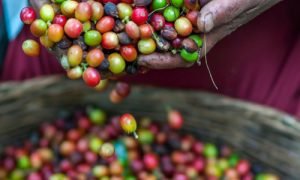
Guided Tour of coffee plantation & surrounding area
A free packet of ground coffee (packaged)
Coffee and morning tea at Cafe Inn Hit
*Please ensure that runners or light hiking boots are worn on this extension.

Cook and eat three delicious traditional Indonesian meals, and take the recipes home.
Duration: 3.5-4 hours (9am-12.30pm)
Price: AUD $75 per person (minimum of 2 guests)
Tour Includes
Collection and return to Hotel in a air conditioned car.
Visit to local market with Chef to purchase food for the cooking class
Water/mineral water
Cooking instructions & participation in cooking of 3 main meals
Copies of recipes
Duration: 5 Days / 4 Nights
Price: AUD $1050 per person (twin share). Single Traveler $1450 ex Labuan Bajo
For those that have just completed the Komodo Dragon trip, our 5-day 4 night Flores Road Trip is a perfect trip extension. Please note that this itinerary can also be done in reverse to work with your kayaking itinerary.
Flores is one of the most diverse landscapes on earth with an amazing array of cultures mixed in. Dramatic mountain landscapes, lush fertile valleys, rivers, lakes, waterfalls, and more await those that wish to explore the island. To top the trip off we will take you to a volcano (Kelimutu) that has three different colored lakes.
Please note that Flores is a rugged and mountainous island and as such the road trip can be long. The hotels used are the best available. They are usually very basic with hot water. The Eco Lodge in Moni has excellent facilities throughout.
Day 1 Labuan Bajo to Ruteng
After breakfast, we will start our road trip to Ruteng. The road will wind its way eastward for a couple of hours before we reach Cancar (pronounced Chanchar). There we will head out to Cara village and climb a small hill that looks over a wide valley. Cara is famous for its spider web rice fields. More technically the agriculture they persist with is known as Lingko in which a field is divided up among the various families of a village from one central location. A wooden pole known as the lodok is placed in the centre of the land. A string is run out to the field’s extremities and then divided into moso (meaning hand) forming the wedge-like fields. As the contours of the land are taken into account across this moso, the field starts to resemble a spiderweb. There are great views of these fields from this hill.
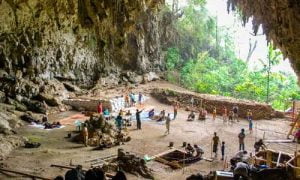
We continue on after lunch to Liang Bua about 1 hour from Ruteng. Liang Bua is the resting place of the Homo Floresiensis, a 106 cm high humanoid that lived in these parts. Discovered in 2003, scientists now speculate why the Hobbit as they are being dubbed, died out. Was it because of Homo Erectus or was it something else? This large grotto cum cave is just off a side road that winds its way through beautiful rice fields and mountain terrain. A local guide will come and show you through the place including a small side cave and the opening to a deep 27-meter hole that leads to another cavern (this is not accessible by non-scientists).
From Liang Bua we will head back to Ruteng and the Susteran Maria Berduka Cita convent run by some very nice Sisters. The rooms are very clean and there is even BBC available on the TV.
Day 2 Ruteng to Bajawa
We continue eastwards into more rugged mountain roads. Along the way, we will stop at a small lake called Ranamese with sweeping views of the coastline. From there we continue to the seaside village of Lega Lapu where we will sample some Arak or Palm spirits. While you may have tasted Arak before, this brew is quite good and actually drinkable.
From Lega Lapu we continue back into the mountains for Bajawa. This is a great yet strange town with bareback cowboys and a beautiful landscape to boot. In the afternoon we will head to Soa which is a natural hot spring just out of town. This is a great place to relax and soothe aching muscles. Tonight we will dine in a timber restaurant (Lucas) that makes great fried potatoes.
Overnight Bajawa Roo Hotel. (B)
Day 3 Bajawa to Moni via Ende.
This is our last day of driving and possibly the most spectacular of them all. After an early breakfast, we will head by car toward an amazingly beautiful valley near the Ngada village of Bena. However, Bena is where we will end our 1.5-hour trek from Gurusina down in the valley. Our trek will take us along small paths back up the mountain, through several Ngada villages.
Ngada culture is based on the balance of the male and female. Houses and smaller structures are either characterized by a male or female spirit. Ngada culture is matrilineal, meaning that property ownership and clan names are passed down through the woman’s side. The men however have great influence in day to day functions of the village. Ngada villages are welcoming and are fascinating and beautiful places to trek through.
We finish our hike in Bena, a large Ngada village overlooking the valley. Keep an eye out for small wooden houses and people sitting atop the homes in these villages.
From Bena, we continue on to Ende and then onto Moni. The road from Ende to Moni would have to be some of the most beautiful on the planet, with sweeping valley views and dozens of waterfalls cascading in the distance. We will arrive in Moni quite late so dinner at the Eco Lodge is suggested.
Overnight Kelimutu Eco Lodge (B)
Day 4 Moni to Kelimutu
We will rise early, around 430am, to walk to the summit of Kelimutu. We can get a small breakfast hamper put together of banana pancakes, water, and a boiled egg to have on Kelimutu. The park’s car park is a 30-minute drive from Moni and then from there a fairly easy 30-minute walk to the top. If we are lucky, the cloud will part at sunrise and the beautiful turquoise lakes of Kelimutu will reveal themselves.
Kelimutu is 3 dormant volcanoes that have been filled with water. Due to minerals being dispersed into the water, the lakes exhibit varying colours. The strange thing is that the lakes are so close to each other but the lakes can have different colours such as red, blue, and black.
If the summit is shrouded in clouds (which is common) and you don’t see the lakes, don’t worry. We will head back down to Moni with a possibility of a 2-hour walk through the fields to the Eco Lodge. We can shower and get another bite to eat there watching the Kelimutu summit from your room waiting for the cloud to clear. We can return to the summit in the afternoon or if all else fails, we can go up again the next day.
We suggest dinner at the Eco Lodge and our personal favorite, Mori’s Moni chicken. (B)
Day 5: Moni to Ende to Bali
This morning, assuming you have already seen Kelimutu, we will go for another walk through the valley. We can even arrange for a horse ride through the villages at your own expense. We will also visit the 10000 Rp market where every bunch of vegetables is 10000 Rp. The stall next door will sell for the same price so the price is not negotiable. The fruit and vegetables are displayed beautifully and it is a nice place to wander.
From there, we will head down to Ende for your flight back to Bali. (B)
Included:
– Accommodation between Labuan Bajo and Moni
– Expert No Roads Guide throughout
– Vehicle use throughout trip
– All meals as outlined in Itinerary
Note: If you are adding this extension to a 10 Day Komodo kayaking trip, then your flight to or from Ende before or after your road trip is included in the Komodo Kayaking trip. Otherwise flights are not included in this trip. Please contact us directly to confirm dates if you wish to add this extension on to a Great Creatures Expedition.
Not included:
– Accommodation in Labuan Bajo
– Flight to and from Flores, unless part of a 10 Day Komodo Kayaking trip
– All other incidentals including lunches and dinners
Duration: 4-6 hours (May-Oct)
Price: AUD $85 per person (2 guests or more)
Price: AUD $115 single guest
Tour Includes
Collection at your Hotel by air-conditioned car
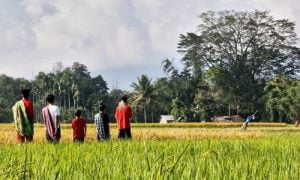
Transfer on the back of a motorbike from the main road along a dirt road into the village
Guided tour of vegetable crops and banana plantations
Guided tour of the village
Lunch in the village
5-20 minute trek through the rice fields to the “pregnant lady rock” and will be told the local story of how the rock formed. Guests will then head back into the village, where once again they will get on the back of a motorbike for a trip to see the fossilized trees and local hot springs.
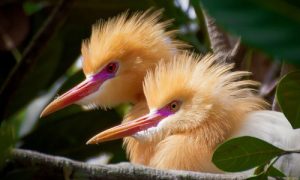
Mbeiling Eco Lodge is a haven for wildlife and the lodge contributes significantly to the conservation and sustainability of the local communities and species of the area.
Stay overnight at this stunning Eco Lodge, which is 45 minutes from the centre of Labuan Bajo.
We can arrange activities such as the Mbeliling Trek, Bird Watching, Flores Coffee & Nature Appreciation Tour, Cunca Wulang Waterfalls or Cecer Village Visit all from Mbeliling Eco Lodge.
Price: AUD $200 per room per night twin share includes return transfers from Labuan Bajo
Check in – 2.00pm – check out 12.00pm
Inclusions:
Return transfer to and from Labuan Bajo by air-conditioned car.
Standard Double/Twin Room accommodation
Breakfast
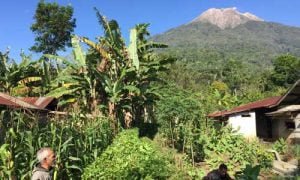
The highlight of this three day tour is the fully guided climb up Mt Inerie to see the sunrise. Mt Inerie is 2,245 meters above sea level and is also one of the highest volcanoes in Flores, the trek takes six hours and starts at the very early time of 2:30 am. Tour also includes a visit to the local hot springs and a visit to the traditional village of Bena. This trip is a wonderful example of the incredible sights that you can discover when you go off the beaten track and take the road less traveled.
For more information go to our Inerie Volcano Trek page here.
Duration: 3 days
Price: AUD $750 per person (minimum of 2 guests)
Single room supplement: $275
Price: AUD $1050 – single guest
Tour Includes
All transfers to and from airport.
Return domestic flights – Labuan Bajo to Bajawa
2 Nights accommodation at Manulalu Hotel including breakfast
Town tour of Bajawa
Visit local hot springs
Sunrise volcano trek up Mt Inerie (start time is 2.30am)
Local Guide for Mt Inerie trek
Driver in Bajawa
Meals – 2 x breakfasts (lunches and dinners at guests own expense)
* Guests must have a good level of fitness to complete the Mt Inerie Volcano Trek. Hiking boots are essential.
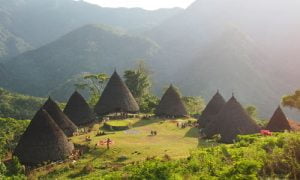
Flores is a relatively unexplored part of Indonesia. This mountainous island hides beautiful villages from the normal tourist, but with this 2 day trek, you will venture into this wonderland and experience the great hospitality of its’ people.
Itinerary
Day 1: We will leave Labuan Bajo at around 8am and head up into the mountains to Dintor Village (approx 4 hours drive). Along the way we will have lunch and witness the ruggedness of the Flores landscape. Once we have arrived at Dintor Village we will start our trek for Wae Rebo village. After a short motorbike ride we will start hiking, which will take us through the amazing open mountain terrain where we will see the fantastic cone shaped houses (approximately 2 hours). In Wae Rebo we will stay in a traditional home and be the guest of the village. They will show us their way of life high in the mountains. This is a great experience for those who want to witness traditional lives in Flores. Dinner and Breakfast will be provided in the village. (L,D)
Day 2: After breakfast you will have some time to immerse yourself in the local village before we start our trek down to Denge Village and then drive to Dintor Village where we will have lunch. From there we will return back to Labuan Bajo in the early evening for you to continue your travels. (B,L)
Included
Car and driver
Local Guide
Overnight accommodation in Wae Rebo Village
Breakfast, Lunch and Dinner (as per itinerary)
Exclusion
Accommodation on the night of Day 2 (your return to Labuan Bajo). We can offer accommodation in Labuan Bajo for AUD$95 Twin Share subject to change and availability.
Price
We can run this trip for 1 – 5 Pax
1 Person $650
2 Person $375 per person
3 Person $345 per person
4 Person $315 per person
5 Person $300 per person
Includes
- Kayak use with all safety gear including vest, paddle etc
- 2 nights camping
- 2 nights accommodation in cabin on our support boat. Note: Cabins are shared by group members of the same gender and we might not be able to accommodate couples in the same room that night.
- National park fees
- Professional guide throughout expedition
- Ranger and local guide fees
- All meals on expedition (4 Breakfasts, 5 Lunches and 5 Dinners)
- Toilet tent
Note : This trip is ex Labuan Bajo in Flores. Daily flights to Labuan Bajo are available from Bali or Jakarta. Guests are required to arrive in Labuan Bajo at least 1 day before the expedition starts. They are also required to be at the Harbour Masters office by 845am on Day 1. Our local manager will make contact the day before to ensure you are all ready to go.
Excludes
- International Airfares and Domestic Airfares
- Accommodation before and after the trip
- Transfers to start of trip at Puri Sari
- Airport Tax
- Travel Insurance for your trip
- Tips
- Alcoholic beverages
Komodo dragons are the largest lizard still living on earth, but they are not the largest reptile. Alligators and crocodiles get bigger than Komodo dragons.
Komodo dragons are monitor lizards. Their scientific name is Varanus komodoensis. They grow to 3m in length and can weigh as much as 150kg. While they are usually slow moving, they can put on spurts of speed equal to a dog.
This is a fully supported Sea Kayaking trip
While sea kayaking itself is relatively safe, the fact that we will be in the remote, well away from other people and potentially help, we have ensured that our Komodo Kayaking trip is as safe as it can be. You will be accompanied by a trained sea kayaking guide as well as a large 17 meter support vessel that is permanently crewed by 5 of our team. If the weather and seas begin to get dangerous we will seek refuge either on a nearby beach or on the support vessel.
Accommodation throughout the trip
While out in the Komodo National Park we will stay 2 nights in Safari-style tents. These are tall tents in which you can stand up. In each tent, we have 2 stretcher beds, each with an inflatable mattress. They are mosquito-proof tents, although mosquitos out on the islands are not usually an issue.
2 nights we stay onboard our support boat, the Air Dua II. Each room is air-conditioned and has a fan as well. All bed linen is supplied as well as pillows which are laundered after each trip.
This is your adventure so you can do as much or as little as you like
One of the great things about our Komodo kayaking trip is that it caters to so many different types of adventurers. For those that want to be active all day, sunrise to even after dark, there is plenty of opportunity to hike, snorkel, and paddle. Our guides are there to accompany you, no matter what you wish to do, so they are ready for anything.
For those that wish to dabble in paddling, do a short hike, and maybe not even snorkel, that is fine too. You can do as much or as little as you like. Many of our guests love spending an afternoon sunbathing on the upper deck of our support boat, lounging into one of our bean bags, and either catching a quick cat nap or reading a book. The beautiful water of the Komodos is just overboard, so a quick dip, a rinse off, and back on the upper deck for another read is a common activity.
We get asked a lot of questions about our Komodo Kayaking trips. The following are certainly the most common however if you have another question please let us know or the answer may be found in our Trip Notes section.
What's sea kayaking like? Is it easy to learn?
Sea-kayaking is a most wonderful way to explore the world. It’s environmentally-friendly, does not require months of training and superior strength, and is good for the body and soul. Sea-kayaking can take you beyond the reach of civilization into the natural world, into the space between earth, sea and sky.
No prior experience is necessary. As long as you are in good health and have a good general fitness along with a sense of adventure, you will quickly master the skills needed to paddle and steer your kayak. Our experienced guides will give an introductory lesson at the beginning of the journey, and will be there to help and keep everyone happy and safe throughout. Obviously the fitter you are, the more enjoyable your experience will be and the easier you will find the kayaking sections.
Is this a good family trip?
This expedition is perfect for families wanting to get away from the hustle and bustle of every day life and spend time together exploring the amazing Komodo Islands. We have a minimum age of 10 years on our expeditions and we offer a 10% discount off the expedition price for all children 14 years of age and under.
How does the SCUBA Diving option work?
For those who would like to incorporate a SCUBA Dive into the itinerary, this can be done and is highly recommended. When you arrive in Labuan Bajo you will need to attend to the SCUBA shop to be fitted out so they have the correct equipment for you on the day you go diving. Your dive will occur the day after the kayaking finishes. After the dive, they will deliver you back to Labuan Bajo. 2 dives for AUD$310.00. You must be certified.
I love taking guests out into the Komodo National Park. It is so different from the mainland of Flores. It is completely natural and we can paddle anywhere we like. And you get to see some incredible things when you least expect it, like a dolphin or whale coming up near you, or a Komodo Dragon actually hunting prey. One of my favourite places is Manta Point, where dozens of large Manta Ray come to be cleaned and feed. It is an incredible experience and one I want to share with you.
Matias
Komodo Islands Guide


